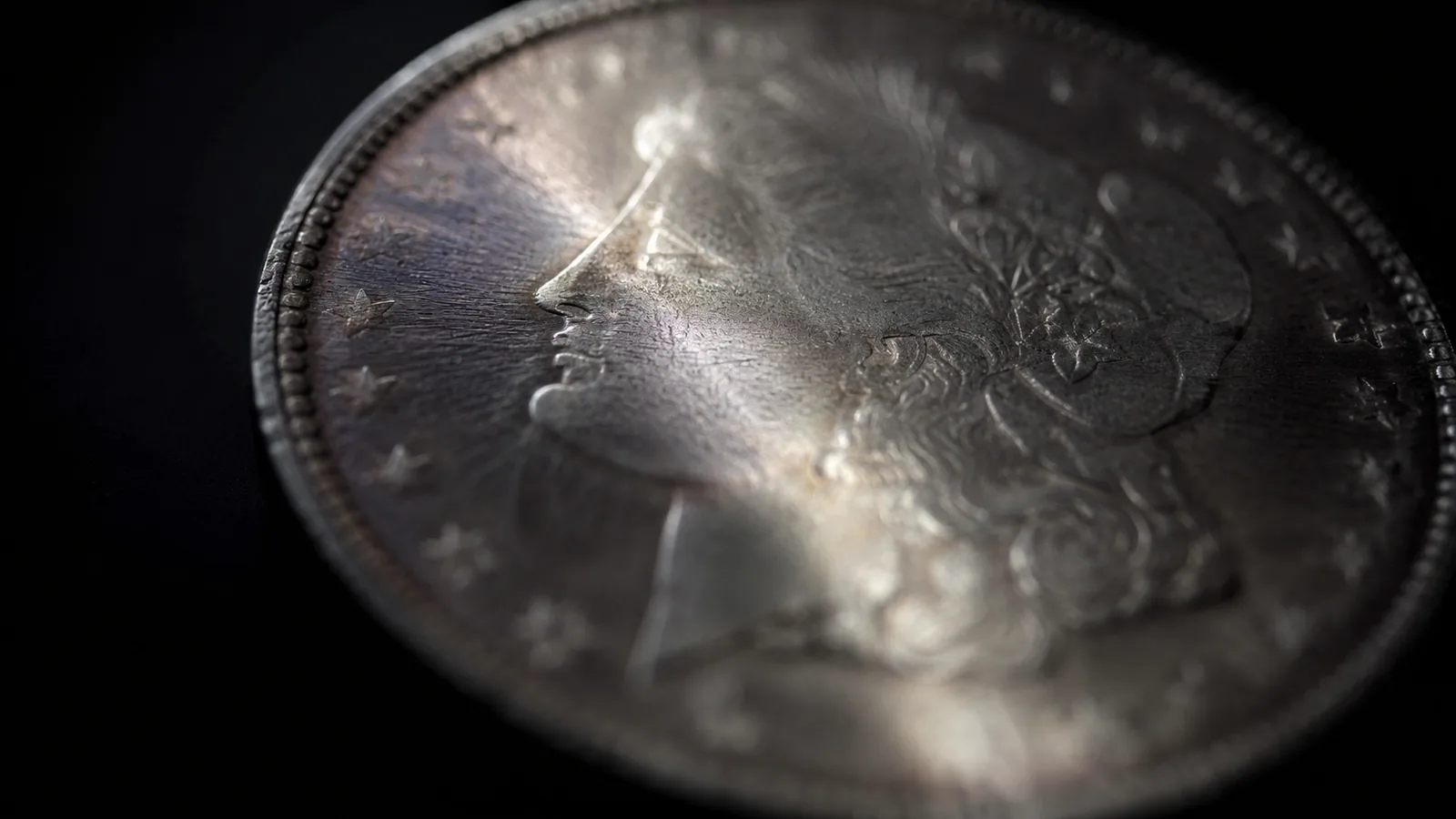
The Franklin half dollar (1948–1963) is a compact 35-coin set with no impossible keys — on paper the friendliest silver series there is. Its market intrigue comes almost entirely from FBL: Full Bell Lines, the strike designation requiring the horizontal lines across the bottom of the Liberty Bell to run complete and unbroken.
We don't print price tables that rot. Every price claim on this page is a shape — where the jumps live — and the links below open live and sold listings so you're always pricing off today's market, not last year's guide.
What FBL actually certifies
The bell's lower lines sit at maximum relief — the last place metal flows during striking and the first casualty of worn dies or weak pressure. FBL therefore certifies strike quality, exactly like FB on Mercury dimes (that guide here). Standards specifics vary slightly between services (PCGS focuses on the lower set of lines; NGC's requirements are its own) — one more reason the designation only means anything inside a holder.
Why some dates explode with it
Strike quality varied hugely by date and mint. Several issues come well-struck routinely — their FBL premium is polite. Others, particularly certain S-mint and heavily produced dates, almost never show full lines: for those, FBL population counts are small fractions of total gems, and the premium multiplies accordingly. The 1953-S is the famous case — readily available in gem, dramatically rare with FBL — making it a condition-designation rarity worth many multiples of its non-FBL price.
The two-step price check that protects you
Before paying any FBL premium: (1) pull the population report for your date — the FBL-to-total ratio tells you if the designation is scarce or routine; (2) pull sold listings both ways. On easy-strike dates the honest FBL premium is small; on the strike-starved dates it's the whole coin. Never learn which type you bought after you've paid.
The rest of the series in one paragraph
No date is rare in circulated grades; 1949-S and a few early issues lead the pack in MS. Marks concentrate on Franklin's cheek and the bell's face — big open surfaces that show everything, which is why superb gems (MS66+) of even common dates carry real premiums. Toning runs gorgeous on Franklins (mint-set cellophane produced famous rainbow examples), with all the usual authenticity caveats — see the toning guide.
Buying strategy
- Set builder: certified MS64/65 without FBL — most of the beauty, none of the strike tax; add FBL only where it's cheap.
- Designation hunter: the strike-rare FBL dates, certified, comped against pops and solds — a genuine specialty with real scarcity underneath it.
- Type buyer: one blazing common-date MS65FBL — the design at full strike for modest money.
Watch FBL split the market date by date
As an eBay Partner, I may be compensated if you make a purchase.
→Sold: PCGS MS64 Franklin halves (no FBL) →Sold: PCGS MS64 FBL Franklin halves →Live: certified 1953-S Franklin halvesSame grade with and without the lines — on most dates a modest spread, on the strike-rare dates a different universe.
The Franklin's lesson is the designation-collector's creed: the label premium is only ever worth the scarcity behind it. Check the pops, comp the solds, and the bell lines will never ring hollow on your invoice.