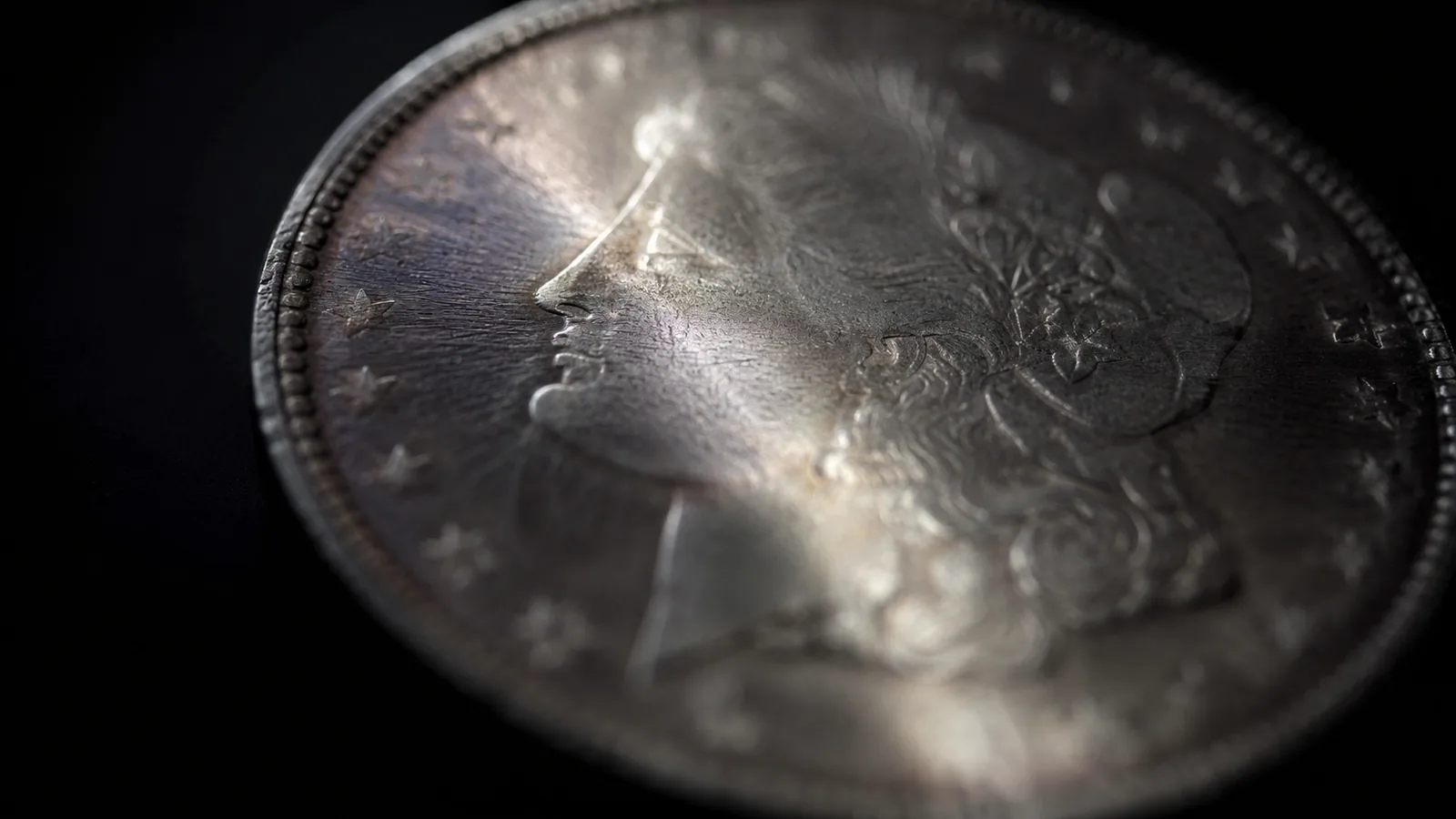
Toning is surface chemistry: silver (and copper) reacting over decades with sulfur and its environment — canvas bags, mint-set cellophane, album pages, coastal air. The result ranges from glorious rainbow crescents to blotchy gray gloom, and the market prices the whole spectrum, from multiples-of-grade premiums down to real discounts.
What the market pays for
- Color quality: vivid blues, magentas, golds, and greens outsell muddy browns and battleship gray. Luster shining through the color — "underlit" toning — is the defining trait of top-tier examples.
- Pattern and story: crescent toning (from a coin sitting half-exposed in a bag stack), textile patterns, mint-set and album toning — recognizable origin stories carry premiums; random splotch doesn't.
- Series context: Morgan dollars are the toning market's capital (those canvas bags again), with Franklins, Peace dollars, and mint-set moderns as strong secondary scenes.
- The coin underneath: color multiplies a nice coin; it doesn't redeem a baggy one. The grade still matters — premium toning on MS65 surfaces is the trophy combination.
When color kills value
- Terminal toning: the chemistry runs one direction — left long enough it darkens toward black and begins etching surfaces. Dark, dull, or blotchy toning trades at a discount to untoned.
- Environmental damage: when reaction becomes corrosion, it's a Details problem, not a patina.
- Artificial toning (AT): the market's premiums summoned an industry of coin cookers — torches, ovens, sulfur treatments — chasing rainbow money. Detected AT is graded as altered surfaces; the "color premium" becomes a problem discount.
How graders call natural vs. artificial
Services grade toning as "market acceptable" or not — a judgment from experience with how honest toning progresses: colors in the right spectral order, following luster flow, plausible for the coin's era and storage. Cooked coins tend to show wrong color progressions, floating color that ignores luster, or patterns no storage history produces. The practical takeaway for buyers: on any serious toning premium, buy certified — a straight grade on a toned coin is the service saying the color story checks out. Raw rainbow coins on the internet are, statistically, an oven's resume.
Buying toned coins sanely
- Photos lie in both directions. Saturation sliders create rainbows; bad lighting hides them. Buy from sellers with a toned-coin track record and consistent photography, with returns.
- Comp against other toned examples, not against the grade's generic price — toned Morgans are effectively their own market with their own solds.
- Premiums are taste-driven and can shift. Pay big color money because you love the coin, not as a guaranteed investment thesis.
- The best entry point: attractively (not spectacularly) toned certified coins — original color, modest premiums, and the slab's surface verdict included.
Study the color market where it trades
As an eBay Partner, I may be compensated if you make a purchase.
→Live: rainbow toned Morgan dollars, certified →Sold: toned certified coins — the premium record →Live: toned mint set FranklinsWatch sold toned examples against the same dates untoned — the spread is the market's live quote on beauty.
Toning is the hobby's reminder that coins are physical objects with lives. Learn to read honest color, insist on certification when the premium gets serious, and the most subjective corner of the market becomes one of its most rewarding.