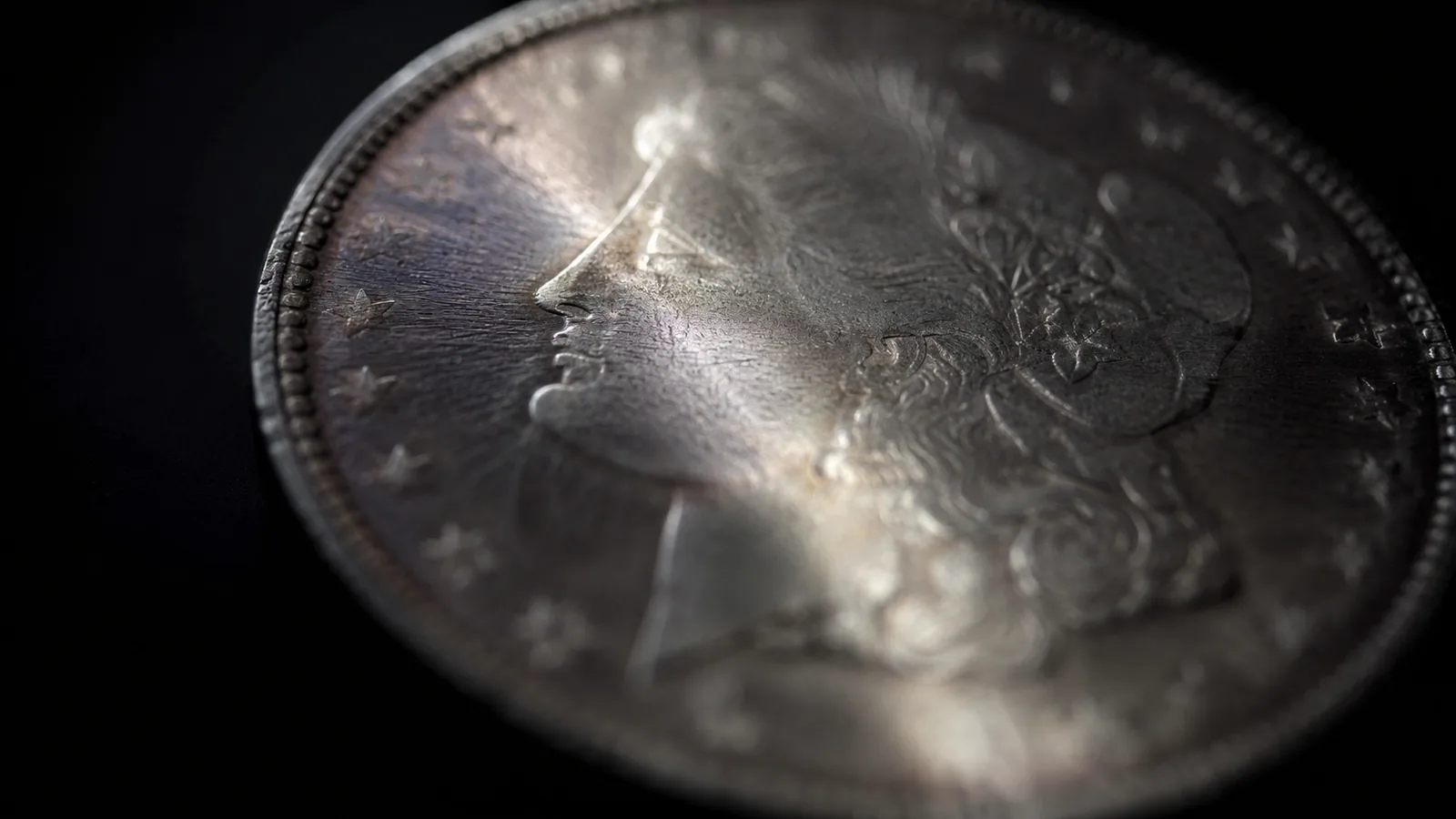
When a grading service issues a Details grade, it's making three statements at once: the coin is genuine, its wear level corresponds to the stated detail grade (AU Details, UNC Details, etc.) — and something disqualifies it from a straight numeric grade. The holder is honest about all three. The market's discount is the price of that honesty.
The problem labels, translated
| Label | What happened | Market reaction |
|---|---|---|
| Cleaned / Harshly Cleaned | Abrasive or chemical cleaning stripped original surfaces | The most common problem; discount deepens with severity |
| Scratched / Graffiti | Post-mint gouges or deliberate marks | Location matters — a scratch across the face is worse than one in the field |
| Tooled / Repaired | Metal moved or added to hide damage | Heavily discounted; repairs spook buyers most |
| Environmental Damage / Corrosion | Chemical attack — sea salvage, ground finds, PVC residue | Varies; stable vs. active corrosion matters |
| Whizzed | High-speed brushing to simulate luster | Treated like harsh cleaning, often worse |
| Bent / Holed / Plugged | Physical damage, sometimes with the hole filled | Deep discounts; plugged coins especially |
| Altered Surfaces | Putty, wax, or chemicals applied to hide flaws | Serious discount — doctoring adjacent |
How big is the discount?
There's no fixed formula, but the shape is consistent: the scarcer the coin, the gentler the discount. A common-date Morgan with cleaning might lose half its numeric-grade value; a key date with light old cleaning loses proportionally less, because buyers who can't afford the straight-graded coin still want the date. Severity and eye appeal drive everything — an old, toned-over light cleaning reads very differently from a raw shiny scrub-job.
When a Details coin is the smart buy
Three legitimate cases: (1) filling a key date you couldn't otherwise afford — a genuine, certified 1893-S Morgan with old cleaning is still a 1893-S; (2) type collecting where the design, not perfection, is the point; (3) high-detail coins with mild problems priced like heavy ones — the market sometimes over-discounts attractive Details coins. In all three: buy at Details pricing, never at numeric-grade pricing, and remember you'll sell at Details pricing too.
Submitting a problem coin: should you?
Full grading fees apply whether the coin straight-grades or not. Certify problems only when the coin is scarce enough that authentication itself carries the value (key dates, gold, counterfeit-prone series). Certifying a cleaned common-date coin buys an expensive label for a cheap problem. And if you suspect residue or active PVC damage rather than cleaning, professional conservation (NGC's NCS service is the established route) can sometimes rescue a straight grade — ask before submitting, not after.
Reading Details listings without getting burned
- Price against sold Details examples of the same coin — not against straight grades minus a guess.
- Demand photos that show the problem. A seller hiding the cleaning in glare is negotiating with your imagination.
- Verify the cert like any other slab (how) — Details holders get faked too, usually holding worse problems than the label admits.
Comp the discount before you touch a Details coin
As an eBay Partner, I may be compensated if you make a purchase.
→Sold: NGC & PCGS Details Morgan dollars →Live: certified Details key date coins →Sold: straight-graded equivalents for comparisonThe straight-grade sold price minus the Details sold price is the market's exact charge for the problem. Pay the Details price or pass.
A Details holder isn't a scarlet letter — it's accurate labeling, which is more than raw problem coins offer. Priced correctly, these coins let collectors own dates they otherwise couldn't. Priced like straight grades, they're the most reliably overpaid coins online. The label tells you which side of that line the listing sits on.