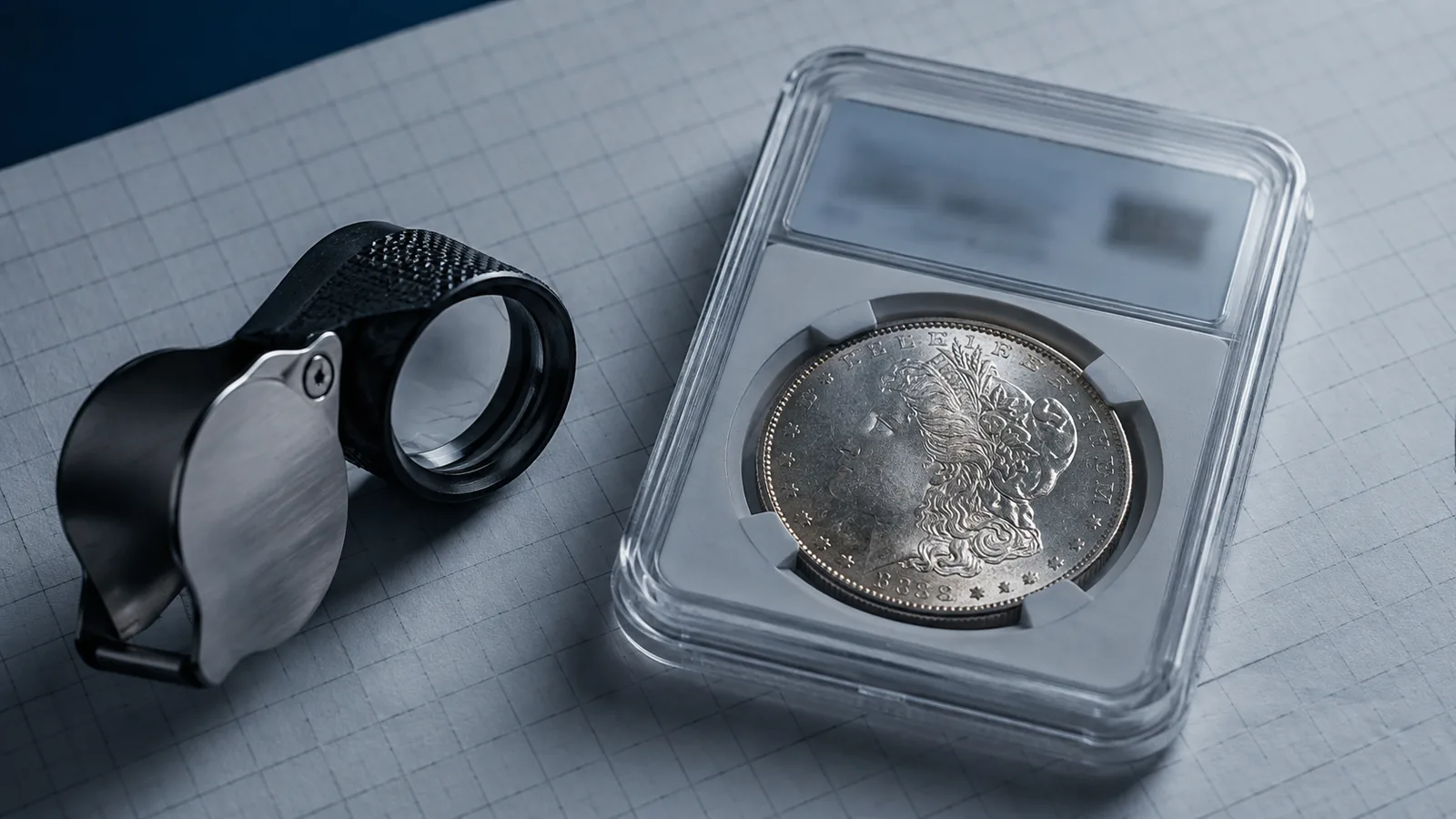
Every legitimate grading service prints a unique certification number on its label and maintains a public database keyed to it. Verification is free, takes less time than reading a listing description, and defeats the majority of slab fraud on its own. This is the habit that separates careful buyers from future victims.
Where to verify, service by service
| Service | Where | What you'll see |
|---|---|---|
| PCGS | pcgs.com → Cert Verification | Coin details, grade, pop data; TrueView photos on many coins |
| NGC | ngccoin.com → Verify NGC Certification | Full description, grade, designations; images on many coins |
| CACG / CAC stickers | cacgrading.com verification | CACG grades; sticker validity for CAC-stickered coins |
| ANACS | anacs.com verification page | Certification details for ANACS holders |
| ICG | icgcoin.com verification | Certification details for ICG holders |
Both PCGS and NGC also offer phone apps with built-in scanning, and recent PCGS holders include an NFC chip you can tap with a phone — the chip check plus database match is the strongest quick verification available.
What must match — the full checklist
- Date, denomination, mintmark — character for character.
- Grade and designations — MS65 in the database and MS65 on the label, plus any suffix (FB, FBL, PL, DCAM, star). A designation mismatch is a fail.
- Variety attribution if listed (VAM numbers, overdates, doubled dies).
- Photos, when provided. This is the decisive one. Compare toning, contact marks, and strike details against the listing photos. Toning patterns are effectively fingerprints.
Why photos beat the number alone
Counterfeiters clone real cert numbers from real coins precisely because the number "verifies." The database can't tell you the plastic in front of you is genuine — only that a coin with that number exists. Matching the coin's face to the service's photos closes that gap. When the service has no photos on file, lean harder on holder inspection and the seller checks in our fake-slab guide.
The buyer's routine, start to finish
- Confirm the listing shows the full label including cert number. No number visible → ask for a photo; refusal → walk.
- Run the number on the service's own site (type the URL yourself — never follow a "verification link" a seller provides; fake verification pages exist).
- Match every field, then match the photos.
- Sanity-check price against sold listings.
Three minutes, zero cost, and it filters out nearly everything that would have hurt you.
Build the habit on real listings
As an eBay Partner, I may be compensated if you make a purchase.
→Live: certified coins with visible cert numbers →Live: CAC stickered coins to verifyOpen any listing, find the cert, run it. Practicing on coins you don't intend to buy makes the routine automatic for the ones you do.
One last habit worth stealing from dealers: verify after delivery too, in hand, before feedback. The holder you received should match the holder photographed. Discrepancies at that stage are an immediate return-and-report, and platforms side with buyers who documented the check.