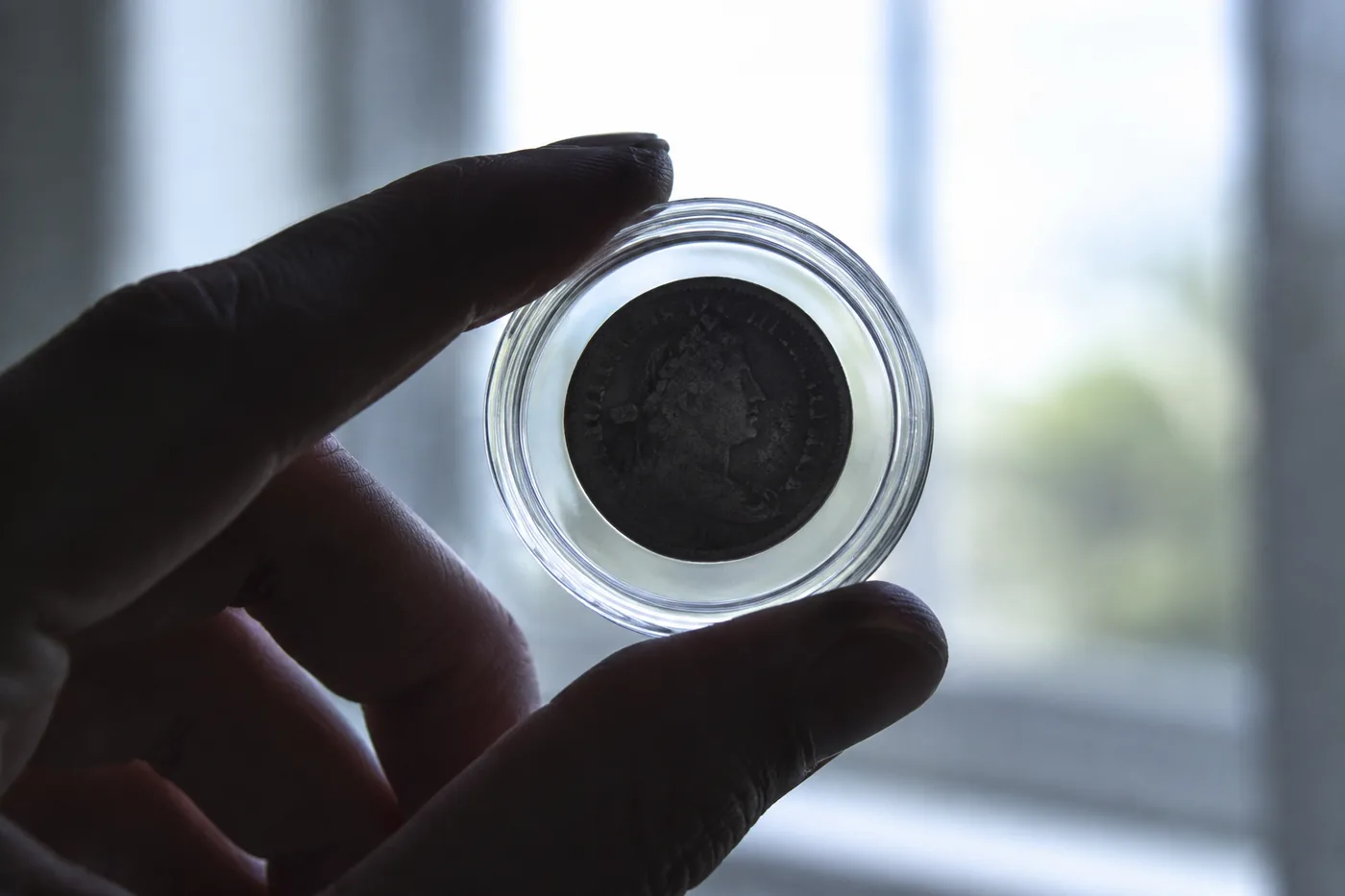
The Buffalo nickel (1913–1938) is beloved and brutal: struck in hard nickel alloy with high-relief design, it wore quickly, struck inconsistently, and — on the dateless slugs filling dealer junk bins — often erased its own identity. Grading the series starts, famously, at the horn.
We don't print price tables that rot. Every price claim on this page is a shape — where the jumps live — and the links below open live and sold listings so you're always pricing off today's market, not last year's guide.
The horn ladder
- No horn: heavily worn (AG–G territory); on many dates the date itself is going or gone.
- Partial horn: the VG–F band, where most circulated survivors live.
- Full horn: the traditional VF–XF marker — and the first grade where the design fully performs. "Full horn" examples are the circulated value sweet spot for most dates.
- Mint state: luster takes over from the horn; marks on the bison's shoulder and the Indian's cheek decide 63 vs 65. Gems of many 1910s–20s branch-mint dates are legitimately scarce.
The trap: strike vs. wear at the horn
Some issues — notoriously mid-1920s branch mints like the 1926-D — struck so weakly that uncirculated coins show soft horns, while honest wear on a sharply struck date can leave more horn than a weak strike ever had. Luster breaks, not horn alone, separate the two. This is exactly the ambiguity certification resolves, and why MS branch-mint Buffalos belong in holders.
Dates that run their own market
- 1913-S Type 2: the first-year key after the design's mound revision.
- 1926-S: lowest mintage of the series; expensive circulated, condition-rare in MS.
- 1918/7-D overdate: the celebrity variety — certified only, heavily counterfeited.
- Three-legged 1937-D: the famous die-polish error; same rule, plastic only.
- 1921-S, 1924-S, 1925-S, 1926-D: the semi-key/condition-rarity crowd where full-horn circulated coins carry genuine premiums.
Where the value sits
- Best beauty-per-dollar: common dates (late 1930s especially) in certified MS64–65 — blazing luster, modest money.
- Best circulated value: full-horn VF/XF better dates — the design complete, the price sane.
- Certify: all keys and varieties, all MS branch mints, anything where strike-vs-wear ambiguity or counterfeiting is in play. Raw is fine for common circulated dates you can read.
Comp the horn premium and the key dates
As an eBay Partner, I may be compensated if you make a purchase.
→Sold: certified full horn Buffalo nickels →Sold: PCGS MS65 Buffalo nickels →Live: certified 1937-D three legged BuffaloWatch how the full-horn line splits circulated prices, and note that every variety listing worth bidding on is in a holder.
The Buffalo rewards buyers who can tell strike from wear and read a horn honestly — and quietly punishes everyone else. When in doubt, the holder knows.