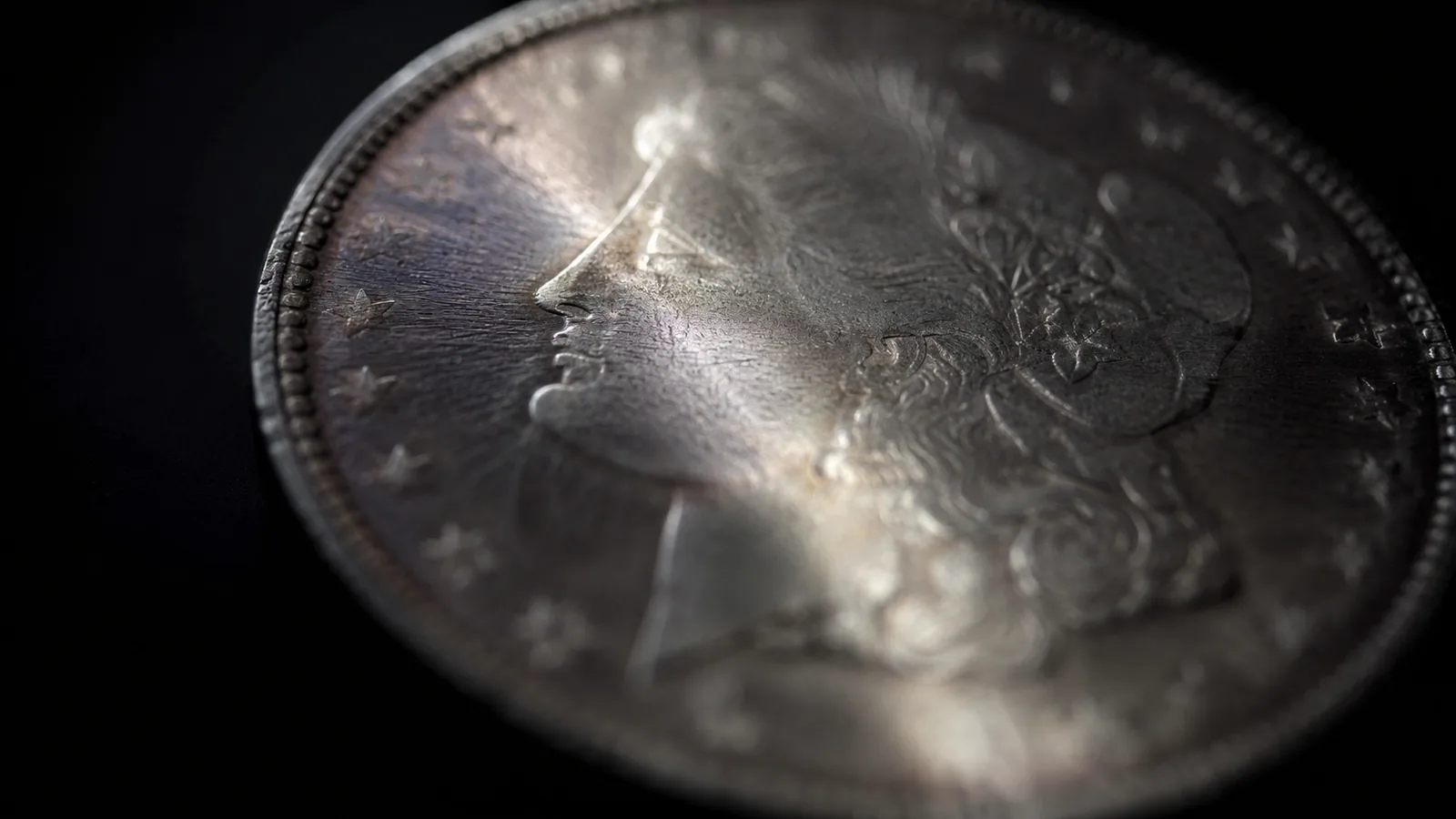
The Morgan dollar (1878–1904, 1921) is the entry point and lifelong obsession of American collecting, and its grading economics teach every lesson the hobby has. The core fact: for common dates, huge quantities survive in mint state because of Treasury hoards — so value concentrates violently in quality within mint state, not in mere uncirculated status.
We don't print price tables that rot. Every price claim on this page is a shape — where the jumps live — and the links below open live and sold listings so you're always pricing off today's market, not last year's guide.
The ladder, step by step
- Circulated (VG–AU): common dates trade near a floor set by silver value plus a modest collector premium. Grades matter little here; date and mintmark matter a lot.
- AU58: the "slider" — full detail, faint friction. Often priced near or even above low mint state, a quirk we unpack in AU58 vs MS60.
- MS63: uncirculated with noticeable marks, usually on Liberty's cheek. The liquid workhorse grade.
- MS64: visibly cleaner; the step up from 63 is real but moderate. The value grade for most buyers.
- MS65 — the gem line: here the staircase steepens. Clean cheek, strong luster, minimal field marks. For many dates the 64→65 jump is the largest percentage move on the whole ladder.
- MS66+: jumps keep steepening but populations thin and registry competition takes over the pricing. This is specialist territory.
Why the cheek decides everything
Liberty's cheek is the Morgan's largest smooth surface — the first place bag marks land and the first place graders look. Train your eye there: an otherwise flashy coin with a scuffed cheek is a 63/64; a clean-cheeked coin with booming luster is knocking on gem. This single habit explains most of the grade you're paying for.
Date matters more than grade below gem
A common 1881-S — the most available gem Morgan — and a Carson City issue at the same grade live in different price universes. Before comparing grades, know your date's tier: common (1881-S, 1885-O, 1921...), better (many CC issues, semi-keys), and key (1893-S, 1889-CC, 1895). For better dates, circulated examples carry real money and certification matters at every grade.
Designations that multiply price
- PL (Prooflike) and DMPL (Deep Mirror Prooflike): mirror fields from fresh dies; big premiums, only certifiable in a holder.
- VAM varieties: attributed die varieties with dedicated collectors.
- CAC stickers: the quality filter matters most exactly here, in the 64–66 band where money concentrates (what CAC means).
Buying strategy by budget
- Value hunter: certified MS64 common dates with clean cheeks — most of gem's look, a fraction of gem's price.
- Quality buyer: MS65 with CAC, chosen for luster and cheek; skip the generic 65 that barely made it.
- Date collector: spend on the date, accept honest circulated grades, insist on certification for anything better-date.
Price the steps yourself — live and sold, by grade
As an eBay Partner, I may be compensated if you make a purchase.
→Sold: PCGS MS63 Morgan dollars →Sold: PCGS MS64 Morgan dollars →Sold: PCGS MS65 Morgan dollars →Live: CAC Morgan dollarsOpen all three sold searches side by side and the staircase draws itself for whatever date you're chasing.
The Morgan rewards exactly one discipline: decide which step of the staircase you're buying before you shop, and refuse to pay next-step money for this-step coins. The cheek will tell you which is which.