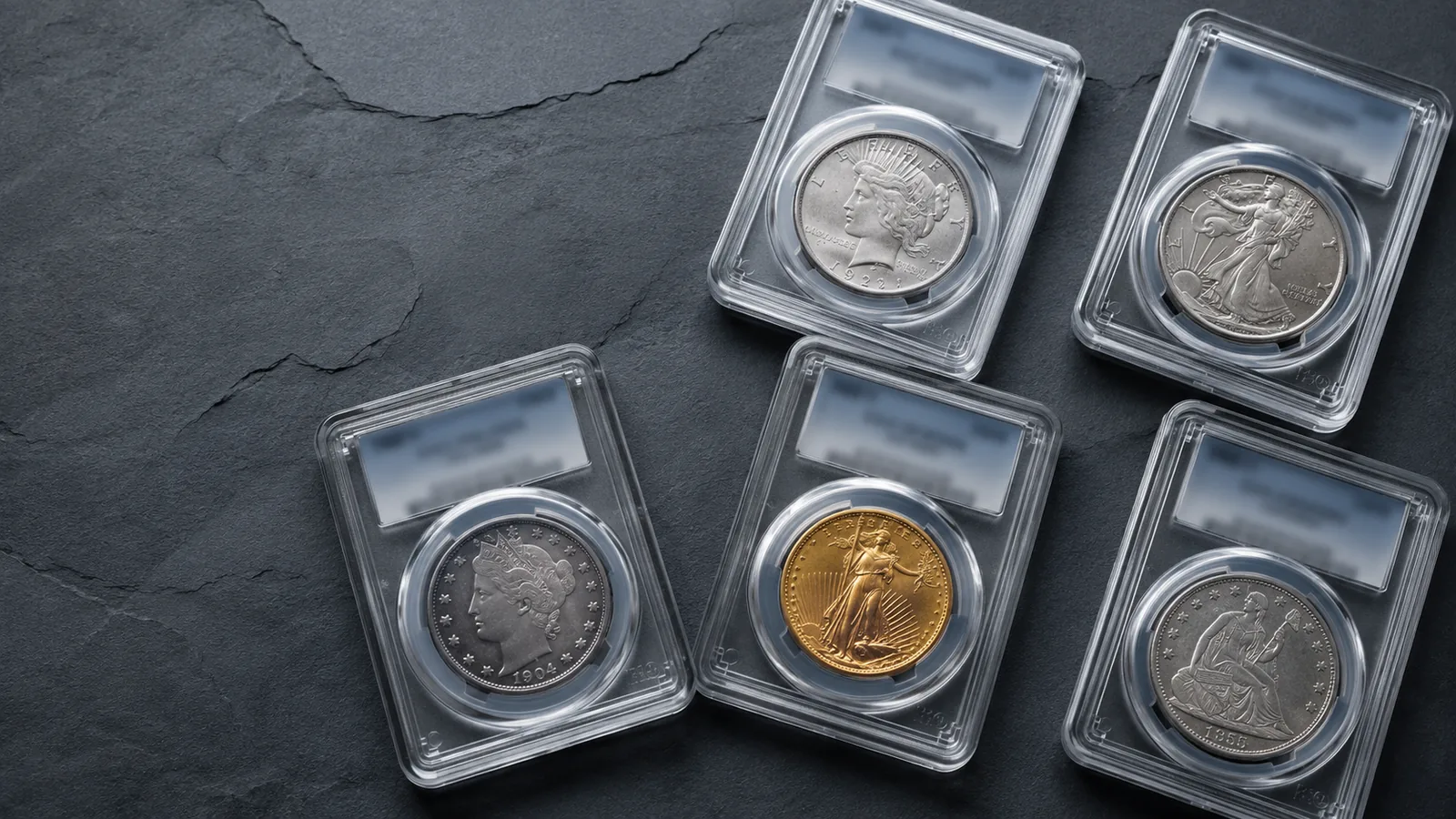
American Silver Eagles (1986–present) come off modern presses so well-made that the overwhelming majority of graded examples earn MS69 — "virtually flawless with minute imperfections." A meaningful share earn MS70: "flawless under 5x magnification." The market prices that hairline difference at multiples, and whether the multiple is rational depends entirely on which coin, which year, and which buyer you are.
We don't print price tables that rot. Every price claim on this page is a shape — where the jumps live — and the links below open live and sold listings so you're always pricing off today's market, not last year's guide.
The honest case for paying the 70 premium
- You're buying perfection as the product. A registry collector or gift buyer purchasing "flawless" as a concept gets exactly what the label promises, from a service whose opinion the market accepts.
- Genuinely low-pop 70s. A few dates and finishes have small MS70/PR70 populations relative to demand — for those, the premium reflects real scarcity. Population reports (free) tell you in seconds whether yours is one.
The honest case against
- Most 70 populations are enormous. For typical bullion-issue years, tens of thousands of MS70s exist, with more gradeable coins sitting in mint boxes. Scarcity is a faucet, not a fact.
- Premium compression has history. Label-driven modern premiums have repeatedly narrowed over time as populations grow — the 69, priced near silver value, has far less premium to lose.
- The eye can't verify the difference. You are buying the opinion, not a visible property. That's fine — it's what grading is — but on a 5x-magnification distinction, resale depends wholly on the label market staying enthusiastic.
The stacker's rule vs. the collector's rule
Buying silver? MS69s frequently trade near generic bullion prices — effectively free certification on your metal. Buy all you like. Buying labels? Pay 70-money only where the population is actually small or the specific issue (proofs, anniversary editions, low-mintage finishes) has demand that outruns supply. And ignore label decoration — signatures and special inserts are marketing, not rarity (our label guide covers that game).
Special finishes: where 70s can matter more
Proofs, reverse proofs, burnished issues, and anniversary sets run smaller mintages, and their PR70/SP70 premiums rest on firmer ground than bulk bullion strikes — same verification steps, better underlying scarcity. The 1995-W proof remains the series' aristocrat, valuable at every grade.
Comp the one-point spread yourself, today
As an eBay Partner, I may be compensated if you make a purchase.
→Sold: MS69 American Silver Eagles →Sold: MS70 American Silver Eagles →Live: PR70 proof Silver EaglesRun both sold searches for the same date. The spread is the price of one invisible point — pay it knowingly or bank it in silver.
Neither answer is wrong. Just make it a decision: the 69 buyer is buying silver with a bodyguard; the 70 buyer is buying a label market. Both are fine trades at the right price — and the sold listings will always tell you what the right price is this week.