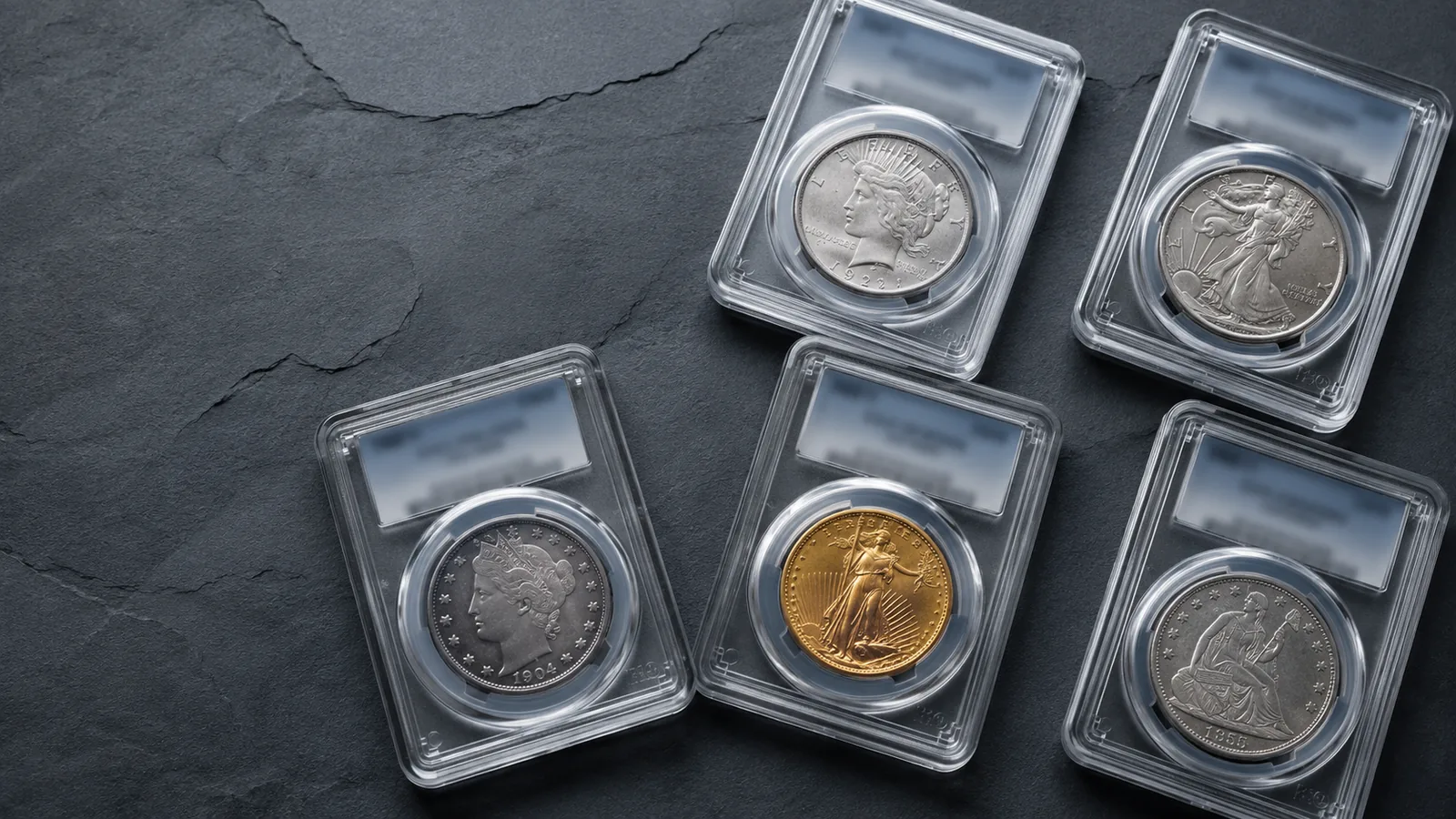
The top of the Sheldon scale gets crowded on modern coins: contemporary minting is so good that vast numbers of coins arrive genuinely spotless, forcing the market's finest distinction — MS/PR69 versus MS/PR70 — onto surfaces where nothing is visible without glass.
The definitions
- MS70 / PR70: no post-production imperfections visible at 5x magnification — the services' operative standard for "perfect." Full strike, full original finish, nothing the mint didn't put there.
- MS69 / PR69: virtually perfect — a nearly imperceptible flaw or two at 5x: a microscopic contact tick, a tiny planchet imperfection, the faintest break in frost.
Note what the standard is not: it isn't "flawless at any magnification" — electron-microscope perfection isn't the claim. And "post-production" matters: certain as-struck characteristics from the minting process are treated differently from handling damage. The grade is an expert judgment that nothing happened to the coin after the dies let go of it.
Why the call is genuinely hard
- The flaws are at the edge of the standard. At 5x, the difference between a dust-speck-sized planchet flake and a contact tick is a judgment made in seconds by professionals grading high volume.
- Milk spots and later-developing haze. Some modern silver develops spots over time from planchet-washing residue — a coin can be honestly graded 70 and develop spots afterward in the holder. Services' guarantees treat this in specific ways; buyers of older-dated 70s should look at the coin, not just the label.
- Consistency at scale. The services grade modern coins by the hundreds of thousands. The 69/70 line is as consistent as human process allows — which is very, and still not perfectly.
What this means for your money
The 70 label is a professional certification of perfection as defined — real, checkable, and market-accepted. What it is not is automatically scarce: population reports tell you whether your issue's 70 is one-in-few or one-of-fifty-thousand. The full economics — when the multiple is worth paying — are in our Silver Eagle 69-vs-70 breakdown; the short version is: price the population, not the adjective.
Buyer's checklist at the top of the scale
- Pull the population report for the exact issue and finish — the 70's scarcity (or lack of it) is public data.
- Comp sold 69s and 70s side by side; the spread should be explained by the pops.
- On older-dated modern 70s, examine actual photos for spotting — the label predates the chemistry.
- Verify the cert like always (the lookup guide) — premium labels attract premium fakery.
Study the boundary with live listings
As an eBay Partner, I may be compensated if you make a purchase.
→Live: MS70 modern coins with photos →Sold: PR69 vs PR70 proof Silver Eagles →Sold: PR69 proof Silver Eagles (compare)The one-point spread, quoted daily by the market itself. Let the populations tell you which spreads are justified.
At 5x magnification, perfection is a definition, not a miracle. Respect the label for what it certifies, check the population for what it's worth, and the top of the scale becomes just another price you can reason about.