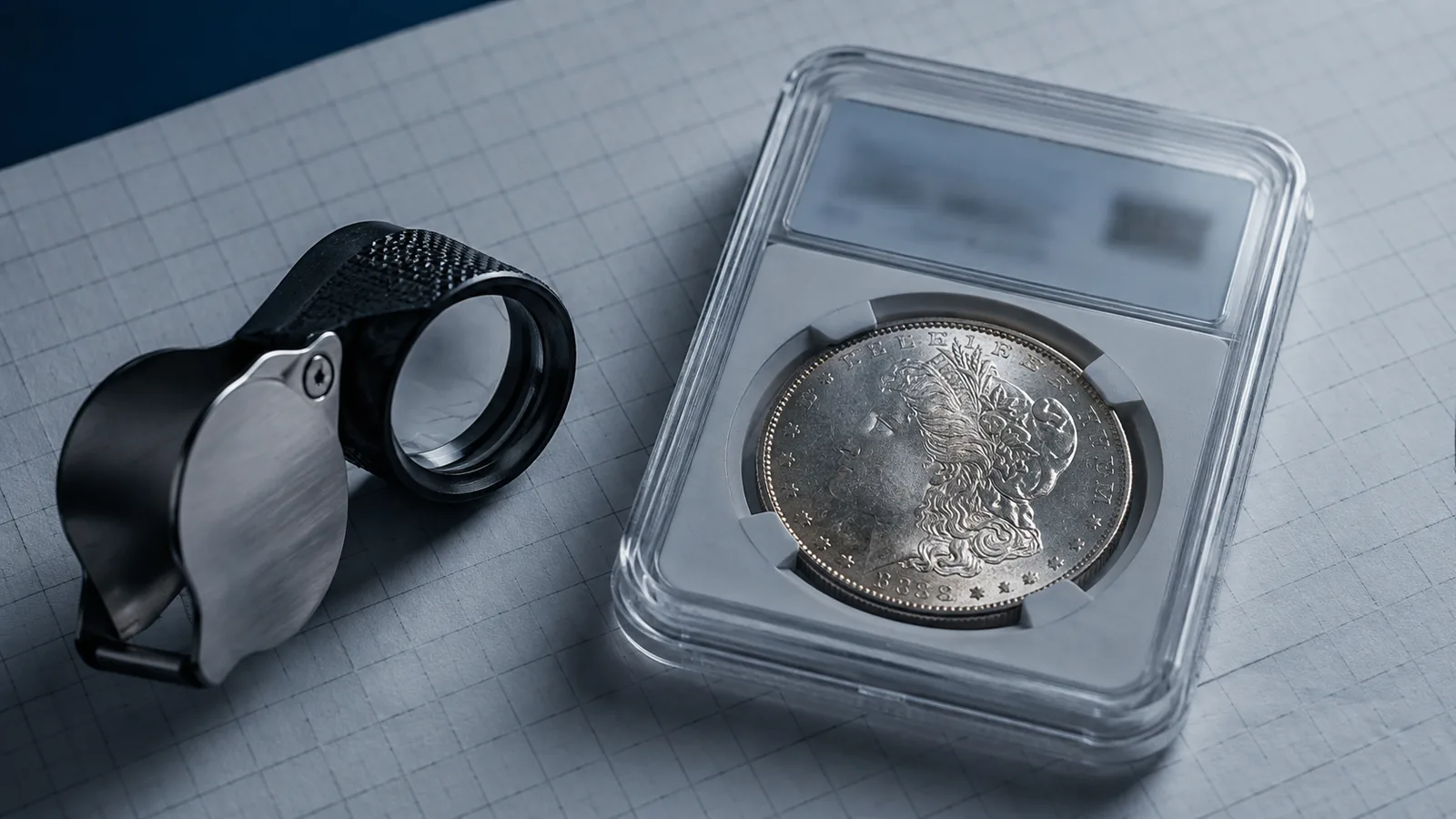
CAC — Certified Acceptance Corporation — was founded in 2007 by John Albanese, who had earlier co-founded both PCGS and NGC. The premise is blunt: within any single grade, coin quality varies. Some MS65s barely made it; others knocked on MS66's door. CAC examines coins already graded by PCGS or NGC and stickers only those it judges solid or premium quality for the assigned grade.
The two stickers
- Green sticker: the coin is solidly graded — "B or better" quality within its grade, in CAC's shorthand. It is not a claim the coin should grade higher; it's a claim the grade is honest and the coin isn't a low-end example.
- Gold sticker: rarer and stronger — CAC believes the coin is undergraded and would merit the next grade up. Gold-sticker coins frequently sell for close to next-grade money.
Coins that fail get no sticker and no mark — the submitter simply gets the coin back. That asymmetry matters when you're buying: an unstickered coin might never have been sent to CAC at all, or it might have been sent and rejected. You can't tell which from the holder.
Why the premium is real
CAC backs its opinion with its own market-making: the company has historically posted bids for CAC-stickered coins, giving them a liquidity floor. Auction results across major venues have consistently shown green-sticker coins of classic U.S. series bringing premiums over unstickered peers at the same grade — the size varies by series and grade, and it's largest exactly where grade-quality spread is widest (conditionally rare classic coins, gold type, better-date Morgans). On generic modern coins the sticker means little; CAC's focus has always been classic material.
What the bean does NOT mean
A CAC sticker doesn't authenticate the coin (the grading service already did), doesn't guarantee toning is original in your judgment, and doesn't make an ugly coin pretty. It's one respected second opinion about grade solidity — a powerful filter, not a substitute for looking at the coin.
Enter CACG — CAC as a grading service
In 2023, CAC launched its own full grading operation, CAC Grading (CACG), encapsulating raw submissions in its own holders rather than stickering others'. CACG slabs have been building an auction track record since; they're accepted by major auction houses and trade strongly on classic material, though liquidity depth is still younger than the big two's. We compare all three in CACG vs PCGS vs NGC.
How to use CAC as a buyer
- Paying a strong price for a classic coin? The sticker is cheap insurance that you're not buying the low-end example everyone else passed on.
- Comparing a stickered coin against a cheaper unstickered one? The unstickered coin isn't automatically inferior — but it must earn the discount with your own eyes. If you can't judge quality within a grade yet, the sticker is doing that job for you, and its premium is fair tuition.
- Verify stickers too. CAC certs can be checked at cacgrading.com — counterfeiters have learned to fake beans as well as holders. More on that in spotting fake slabs.
Watch the premium in live listings
As an eBay Partner, I may be compensated if you make a purchase.
→Live: CAC stickered Morgan dollars →Sold: CAC gold sticker coins →Live: CACG graded coinsCompare stickered vs. unstickered sold prices at the same grade — the spread is the market's quality verdict.
The sticker exists because the 70-point scale is coarser than the market's memory. Within every grade there's a best coin and a worst coin, and money has always known the difference. CAC just made it visible.