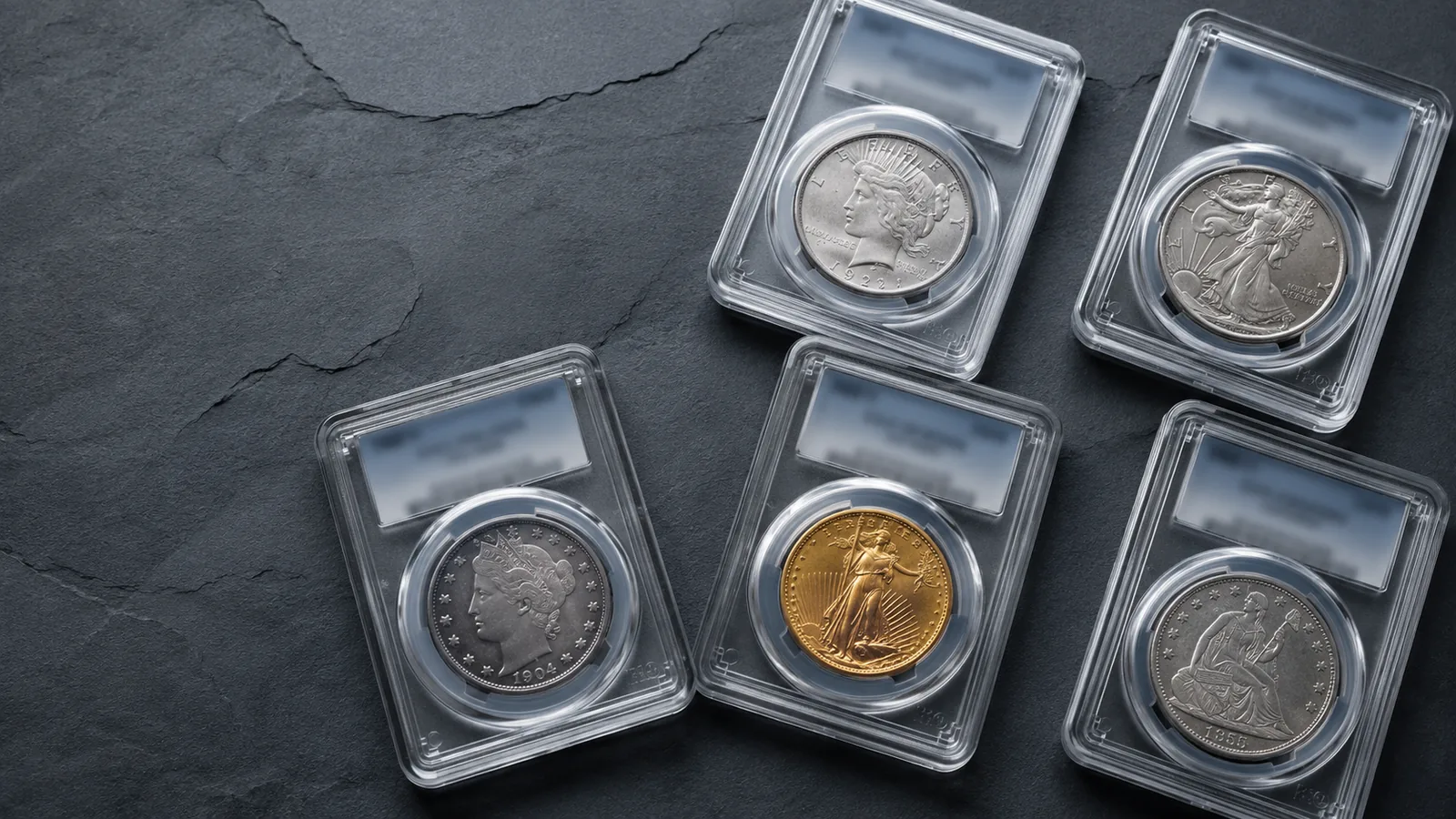
When CAC spent fifteen years stickering only the solid coins inside PCGS and NGC holders, it built something unusual: a brand whose entire reputation is strictness. So when CAC Grading (CACG) opened for raw submissions in 2023, the market didn't treat it like a startup. It treated it like the strict teacher finally grading the whole exam.
What's genuinely different about CACG
- No sticker step. A CACG grade is meant to carry the sticker's meaning built in — every coin in the holder is supposed to be solid for the grade. There is no "low-end CACG MS65" by design intent.
- Classic-coin focus. CACG's center of gravity is classic U.S. material — the same territory where the CAC sticker premium always concentrated. It is not chasing bulk modern volume the way the big two do.
- Reputation transfer. The bet is that fifteen years of sticker credibility transfers to the holder. So far, auction behavior on classic coins suggests it largely has.
How the three trade against each other
| Factor | PCGS | NGC | CACG |
|---|---|---|---|
| Liquidity depth | Deepest, especially classic U.S. | Deep; dominant in world/ancients | Growing; strongest in classic U.S. |
| Registry demand | Strongest (PCGS-only registry) | Own registry | Younger ecosystem |
| Market read on strictness | Tight | Tight | Markets price it as tightest on classics |
| Best fit | Classic U.S., long-term resale | World, ancients, moderns | Quality-focused classic U.S. |
The practical translation: a CACG-graded classic coin tends to trade like a stickered coin — buyers assume the grade is solid and bid with confidence. PCGS keeps its structural advantages (registry, deepest resale pool). NGC remains the default for world coinage and a full peer on U.S. material.
Don't overthink the logo on cheap coins
On coins under a few hundred dollars, holder choice barely moves resale. The three-way race matters where grade-quality spread is worth real money — better-date classics, gold type, conditionally rare issues. Everywhere else, buy the coin.
Which holder should you choose?
- Submitting a classic U.S. coin you'll sell someday: PCGS for maximum resale liquidity, CACG if the coin's strength is quality-within-grade and you're selling to quality-focused buyers. Either is defensible; NGC is never wrong.
- Submitting world coins or ancients: NGC, and it isn't close.
- Buying: all three holders are trustworthy. Verify the cert (each service has online lookup), then judge the coin. A CACG or CAC-stickered holder is a quality signal worth paying something for; an unstickered big-two holder is priced by the coin inside.
Compare all three holders in the wild
As an eBay Partner, I may be compensated if you make a purchase.
→Live: CACG graded coins →Sold: CACG Morgan dollars →Sold: PCGS CAC Morgan dollarsThe most useful comparison: CACG coins vs. CAC-stickered PCGS coins at the same grade — the market's two ways of buying 'solid for grade.'
The duopoly era rewarded knowing two fee schedules. The three-way era rewards knowing what each brand's buyers pay up for. Match the coin to the holder whose audience wants it most, and the logo starts working for you instead of the other way around.