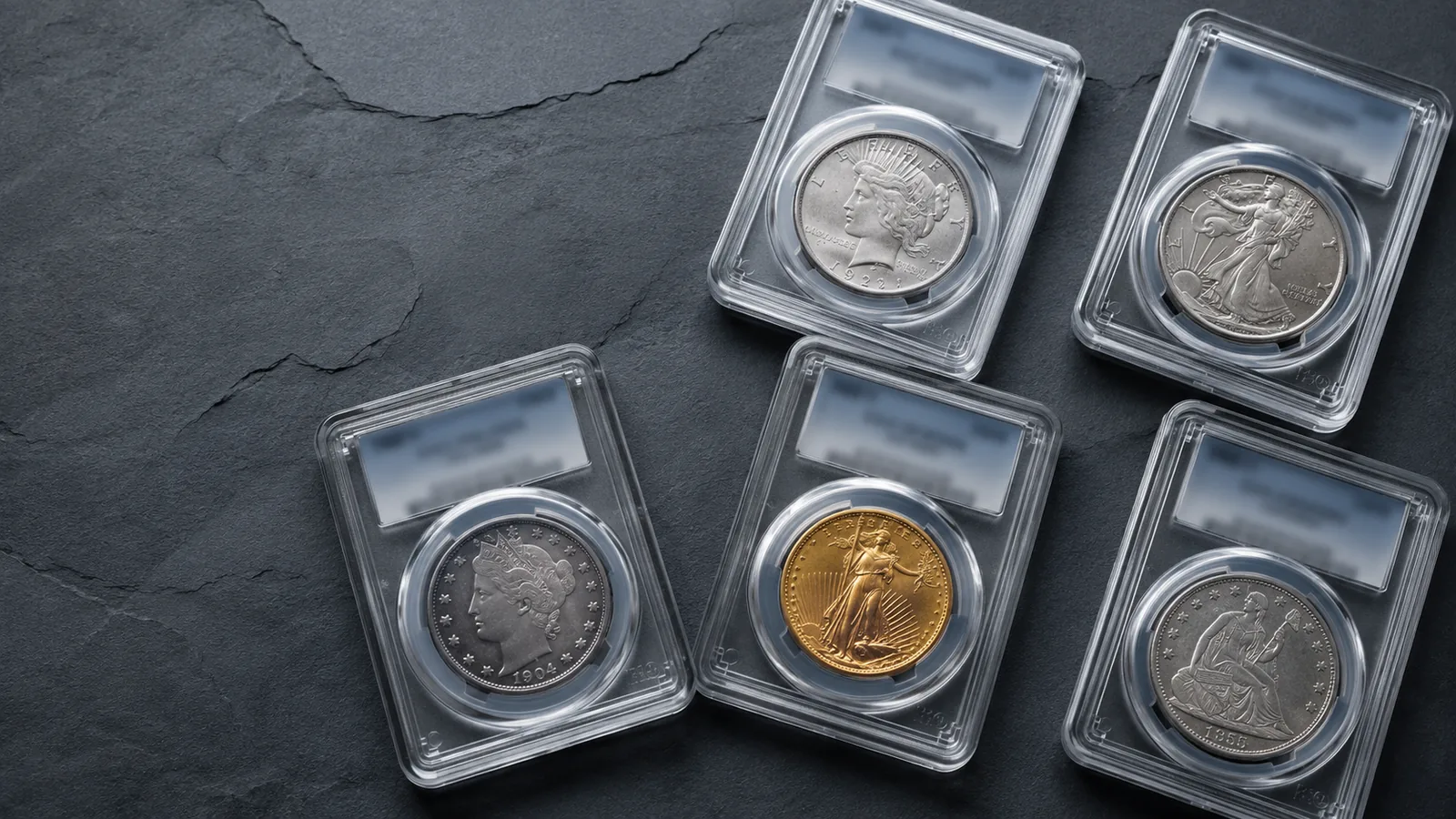
Walk any modern-coin marketplace and you'll see them everywhere: First Strike (PCGS) and Early Releases / First Releases (NGC) banners on silver eagles and modern issues, often with prices meaningfully above plain-label twins. What buyers frequently believe these mean — struck first, fresher dies, sharper coins — is not what they certify.
What the designations actually are
Both programs certify a delivery window: the coin was received by (or documented as shipped to) the grading service within a defined period around the issue's release — the standard window is 30 days. That's the entire claim. The services are explicit about this, because the alternative reading is legally uncomfortable: mints generally don't track striking order, ship coins in production sequence, or promise that early boxes contain early strikes. A First Strike coin was not necessarily struck before a plain-label coin; it was graded sooner.
So the coins are identical?
Physically — as populations — yes: there is no systematic quality difference the label certifies. The die-freshness intuition isn't crazy (fresh dies do strike better coins), but the label doesn't and can't verify any coin's die state. A plain-label MS70 and a First Strike MS70 are the same certification of the same perfection; the banner adds provenance about paperwork timing, nothing about metal.
Why the premium exists anyway
- Marketing works. The designations were built for the modern retail channel — TV, online sellers, subscription programs — where "First Strike!" outsells "regular." Demand created by the label sustains the label.
- Registry and set culture: some collectors build designation-complete sets, creating genuine (if self-referential) demand.
- Scarcity, occasionally real: for a few issues, the labeled share of the population is genuinely small — and there, the premium has actual scarcity under it. As always, the population report settles it in seconds.
The resale reality
Label premiums are the softest premiums in the certified market: they depend entirely on the next buyer caring about the banner. Sold-listing spreads between labeled and plain examples of common issues are typically modest — and have a long history of compressing as populations grow. The durable value in any modern slab remains the grade and the coin; the label is a marketing layer riding on top. (Signature labels — autographed inserts — are the same economics with a handshake.)
The playbook
- Buying? Comp labeled vs. plain solds for your exact issue. Pay the spread only where pops show real scarcity or you're building a labeled set on purpose. Otherwise buy the plain twin and bank the difference.
- Submitting a new release? If you're grading anyway and the window's open, the designation costs little extra (PCGS has charged about $18 for First Strike) and adds a marketing hook at resale. Reasonable — as a hook, not a thesis.
- Selling? If your coin has the label, feature it — the demand is real even if the metallurgy isn't. Honest sellers can market a label while knowing exactly what it is.
Comp the banner premium yourself
As an eBay Partner, I may be compensated if you make a purchase.
→Sold: MS70 First Strike Silver Eagles →Sold: MS70 plain label Silver Eagles →Live: Early Releases NGC coinsTwo sold searches, same coin, with and without the banner — the spread is the current market price of the words on the insert.
None of this makes the labels a scam — they certify exactly what they claim, and the market may pay you for it. It makes them marketing, which deserves marketing-grade skepticism: check the pops, comp both twins, and buy the coin's premium instead of the banner's.